




About
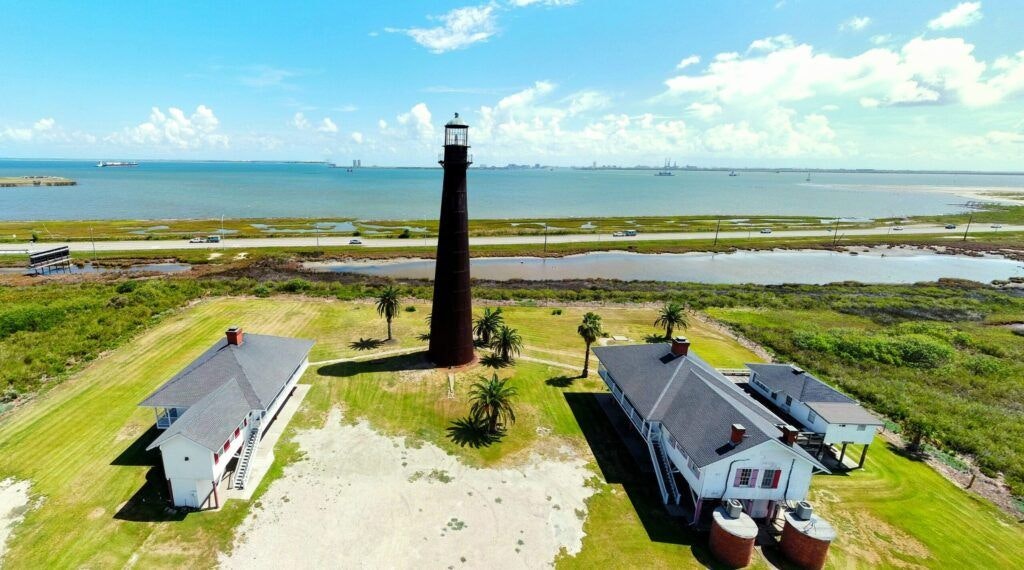
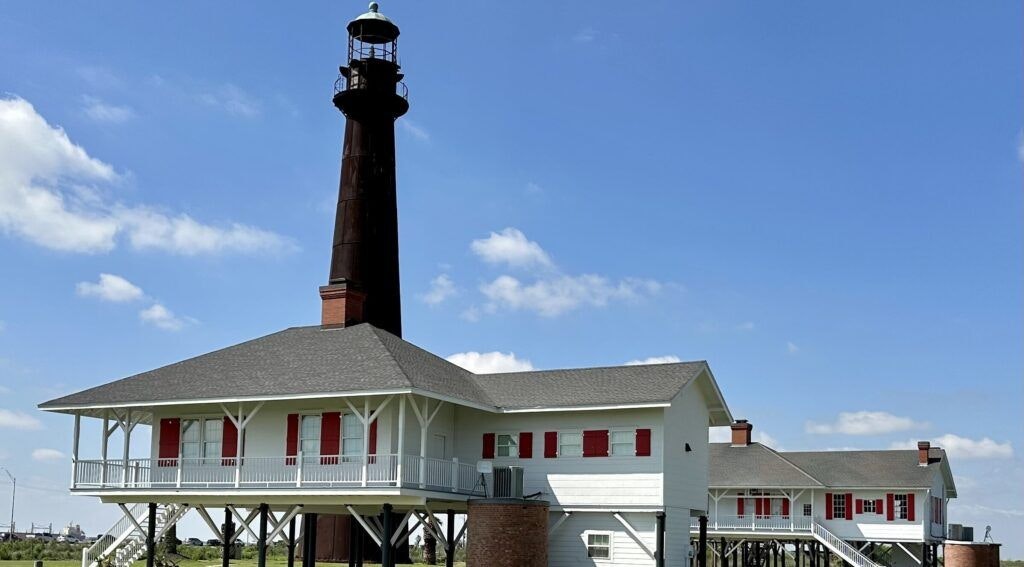
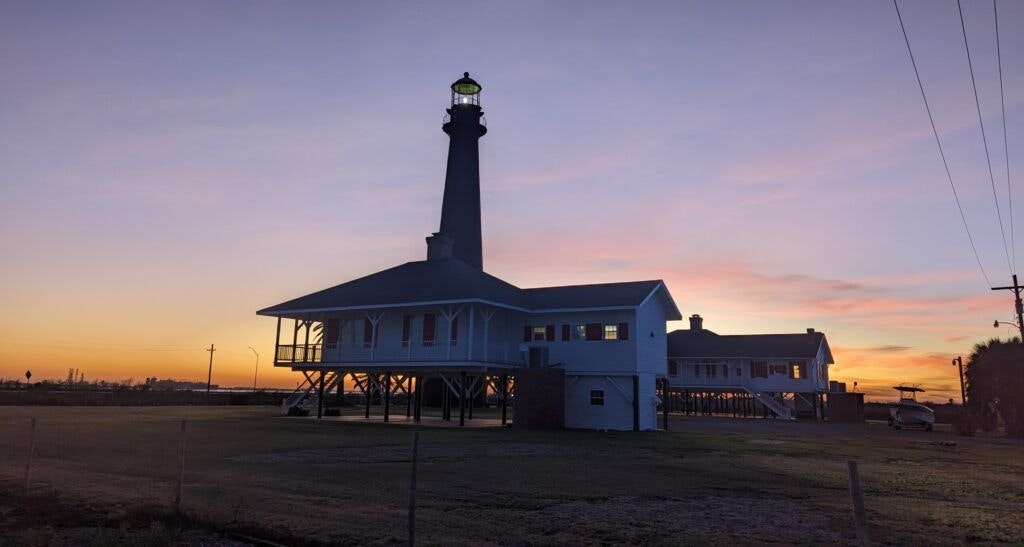
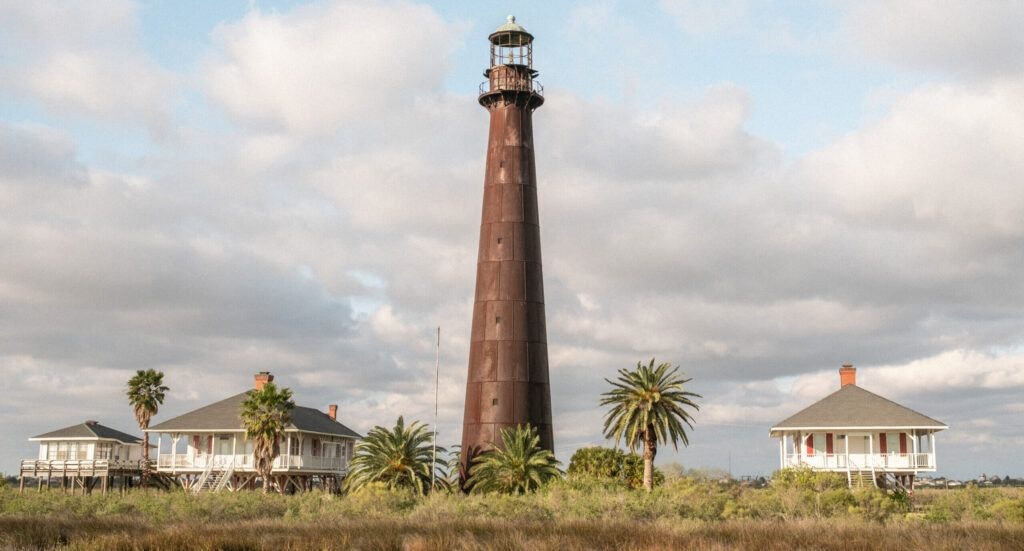
The Bolivar Point Lighthouse symbolizes resilience and a beacon of hope in the face of natural disasters. Constructed in 1872 and rising 117 feet into the air, it has guided mariners through Galveston Bay and impacted the growth of Galveston, Texas City, and Houston.
It is one of the few 19th-century lighthouses remaining on the Gulf Coast and one of only two iron lighthouses in Texas. The iconic tower has countless stories of how it saved those at sea and those on land.
One such tale involves the area's worst natural disaster, the Galveston Hurricane of 1900. The lighthouse withstood savage winds and became a sanctuary for 125 refugees. Many of these individuals had escaped the storm surge that engulfed their train by wading through waist-deep water. Inside the lighthouse, they survived on rainwater and limited food supplies.
In 1915, The stalwart lighthouse once more saved the day when hurricane-force winds reached 126 miles per hour. While it swayed under the onslaught, it did not buckle. Such strength sheltered 61 people tucked inside, sitting two to a step on the iron stairway. Sadly, the lighthouse was declared obsolete in 1933 and sat dormant for years.
In 2015, Mark Boyt and Michael Maxwell, descendants of the lighthouse's first private owners, established a foundation dedicated to its restoration and preservation. While the preservation is underway, November 2022 marked its 150th birthday, adding grandeur to this historical landmark.
Its location makes it neighbors with attractions like the Bolivar Flats and Fort Travis Park. Such convenience makes combining multiple visits easy to schedule, which is why this landmark is a must-see.
Bolivar Point Lighthouse: Fun Facts & Cool Features
The original lighthouse, constructed in 1852, was made of cast iron sourced from the Baltimore foundry of Murray and Hazlehurst. However, it was dismantled during the Civil War to prevent Union warships from using it as a navigational aid.
Also intriguing are the paranormal stories. Some tales include strange shadows, mysterious mists, and fogs erupting from the lighthouse during storms. One haunting tale is of a young man who killed his parents and then himself on the property. However, there is no historical record confirming this tragedy ever occurred.
The lighthouse is adjacent to the Bolivar Flats Audubon Sanctuary, adding yet another reason to visit. Such proximity makes combining historical exploration with the serenity and beauty of nature easy to plan. When your exploration is over, continue your discussions over a hot meal or cold drinks. Nearby eateries like J.B's Seafood and Nauti Beaver Hut are guaranteed to satisfy your crew's ravenous appetite.
While you can't tour inside, the restoration society's goal is to make such an adventure a reality. But even when viewed from ground level, visiting Point Bolivar Lighthouse will add historical significance to a Bolivar Peninsula vacation.
Getting There
Here's your step-by-step guide to make your trip easy, effortless, and enjoyable:
- Take I-45 south towards Galveston and Broadway.
- Continue along Broadway until you reach the beach/seawall.
- Turn left at the seawall and proceed to Ferry Road.
- Turn left onto Ferry Road and continue to the Galveston-Port Bolivar ferry.
- Upon reaching Galveston, board the car ferry that will take you to Bolivar Peninsula.
- After disembarking from the ferry, you're half a mile from the entrance.
- Continue to 7th Street, then make a left turn.
- Address: 419 Everett #385, Port Bolivar, TX 77650
Local Tips
- While the lighthouse doesn't offer many activities, the surrounding area has swimming, fishing, and picnicking.
- The lighthouse is privately owned so respect the signage and property.
- Consider making a donation to help with the renovations.
- The two keeper's cottages on the property add to the historical ambiance and experience.