




About
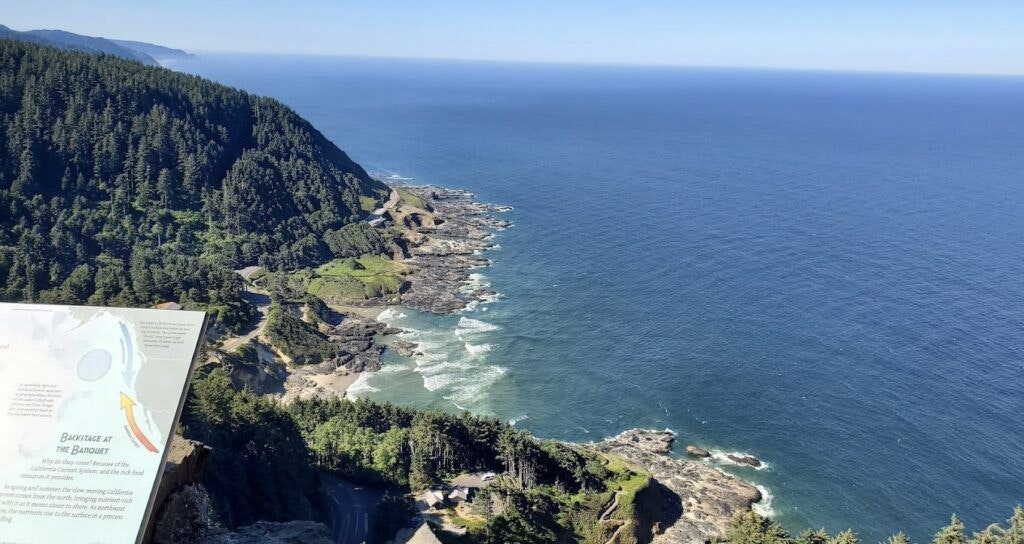
Pack a cooler for a picnic and hit the road to explore the sweeping views of dense forests meeting wild ocean waves at Cape Perpetua Scenic Area.
The Alsi people called this coast home long before explorers mapped it. For thousands of years, they relied on the sea and forests for food, shelter, and community. You'll see remnants of this civilization in what are called shell middens; heaps made from years of discarded shells, bones, and ancient items. These are reminders of a time when the Alsi worked with the land and the tides to survive.
In 1778, British explorer Captain James Cook discovered the area when searching for the Northwest Passage. He named the headland "Cape Perpetua" after the feast day of Saint Perpetua, which marked the date he first saw the site.
In 1914, the area was designated as the Cape Perpetua Scenic Area to protect its mix of rainforest and rugged shoreline. Such forethought ensured that visitors could experience its wild spirit for years to come. Later, it became part of the Siuslaw National Forest.
During the Great Depression, the Civilian Conservation Corps built much of the area's current facilities from 1933 to 1942. Their work included the signature stone shelter at the summit, the first visitor center, and many hiking trails.
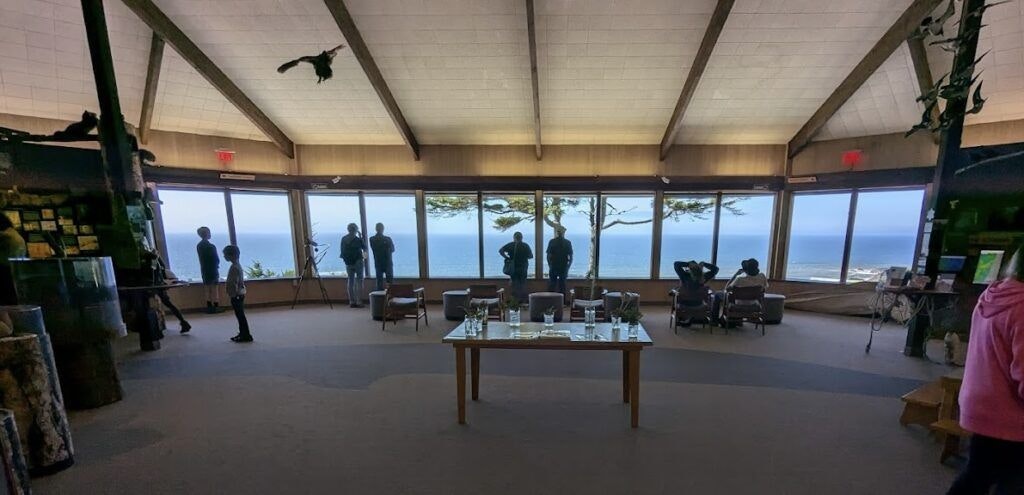
Speaking of the visitor center, this modern structure offers unobstructed views of the ocean and shoreline below. It's also your starting point for hiking any of the 26 miles of trails, which we'll explore a bit in our next section.
The scenic area is near other Oregon natural wonders, like Thor's Well. Drive south toward Florence, and you can explore the Sea Lion Caves and Heceta Head Lighthouse. With so much to see and do, planning an itinerary is easy-peasy!
Whether you opt to drive the scenic roads or hike any of the sweeping trails, a visit to Cape Perpetua Scenic Area will enrich your Central Oregon Coast getaway.
Cape Perpetua Scenic Area: Fun Facts & Cool Features
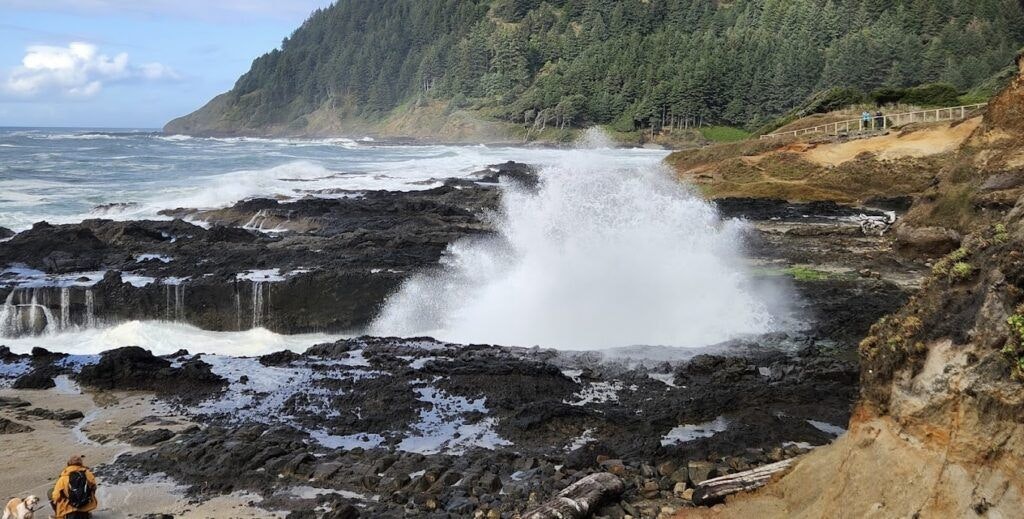
A must-visit on your sightseeing trip is Thor's Well. At high tide, waves rush up through the hole in the collapsed cave and launch spray skyward. Next, it pulls the water back, appearing as if it's breathing the ocean in and out.
The Spouting Horn is just south of Thor's Well at Cook's Chasm. Waves push through a tight underwater tunnel, and the pressure blasts saltwater straight into the air.
Don your hiking boots and head out on the Discovery Loop Trail. It begins at the Visitor Center and is considered moderate by AllTrails. The 1.4-mile loop features educational boards and scenic views with minimal elevation gain and is open year-round. Plan on this hike taking 50 minutes.
The Giant Spruce Trail leads to a massive tree that's 600 years old, 185 feet tall, and 40 feet around. The 1.9-mile trail is considered easy by hiking enthusiasts, is open year-round, and takes about 50 minutes to complete.
After visiting the Cape Perpetua Scenic Area, head south to the Florence area and the Sea Lions Cave. As America's largest naturally formed basalt rock sea cave, it's twelve stories high and as wide as a football field!
Also nearby is Heceta Head Lighthouse with trails, a bed and breakfast, and scenic views. Built in 1894, the lighthouse sits 206 feet above the Pacific Ocean, offering picturesque views from its 56-foot tower.
When you've worked up an appetite hiking and exploring the area, you're never too far from extraordinary cuisine. Beach Street Kitchen in Yachats features hearty breakfasts, hot coffee, soups, salads, tacos, and much more. Down in Florence, Waterfront Depot Restaurant offers upscale cuisine in a friendly and homey atmosphere.
Visiting Cape Perpetua on your Oregon getaway offers spectacular viewpoints, easy-to-follow trails, and fascinating history.
Local Tips
- At Thor's Well, rocks can be slippery, and waves may come farther than expected, so play it safe.
- Wear sturdy, waterproof shoes for exploring the rocky shoreline.
- Check the tide charts before you go.
- The visitor center offers excellent views and informative exhibits.