
Coyoacán

Ignacio Allende 15, Del Carmen, Coyoacán, 04100 Ciudad de México, CDMX

Hours

The sector of Coyoacan in Mexico City is open 24/7. Stay alert to special events, parades, or holiday celebrations.

Cost

There is no fee for visiting Coyoacan.

About

What makes exploring Mexico City exciting are the cities within the city. One such spot is Coyoacán, one of the oldest neighborhoods, where the past meets the present. In regards to history, it predates the Spanish conquest and goes back to the Aztec capital of Tenochtitlán.

Once a quiet village on the outskirts of the bustling metropolis, Coyoacán became a central hub of activity during the 16th century as Spanish colonists set up residences and built churches.

Its name, rooted in the Nahuatl language, translates to "place of the coyotes." It's for this reason you'll spot fountains and local art in the borough commemorating its name.

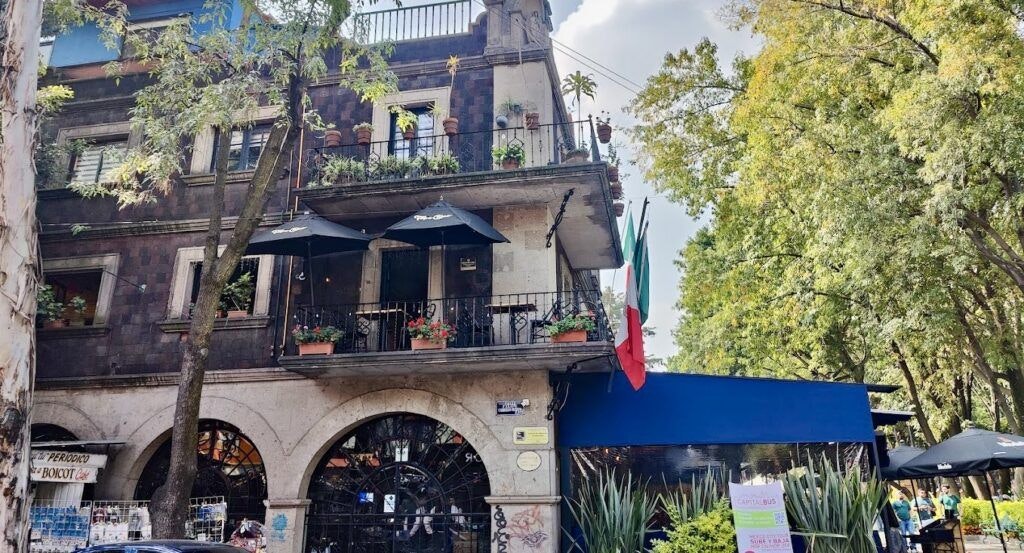
If you enjoy exploring older buildings, the Colonial-inspired homes and historic landmarks will delight you. While they are a delight to the eye, they also provide visitors with an understanding of key moments and figures.

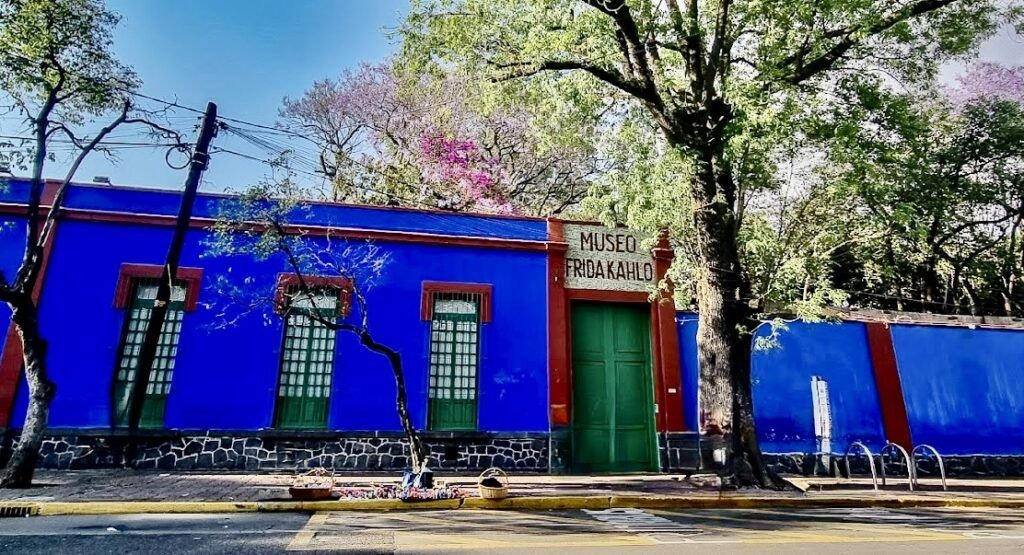
Coyoacán has long been a haven for creatives like world-renowned artist Frida Kahlo. Her former home, La Casa Azul (The Blue House), is now the Frida Kahlo Museum. Nearby, and equally intriguing, is where Leon Trotsky, the exiled Russian revolutionary, lived. The museum gives you an immersive experience into his involvement with Communist Russia and his assassination in Mexico City in 1940. As if that's not enough, there are local markets and lively plazas to explore.

Over the centuries, Coyoacán has transformed into a historic district and a place to share food, stories, and traditions.

Coyoacán: Fun Facts & Cool Features

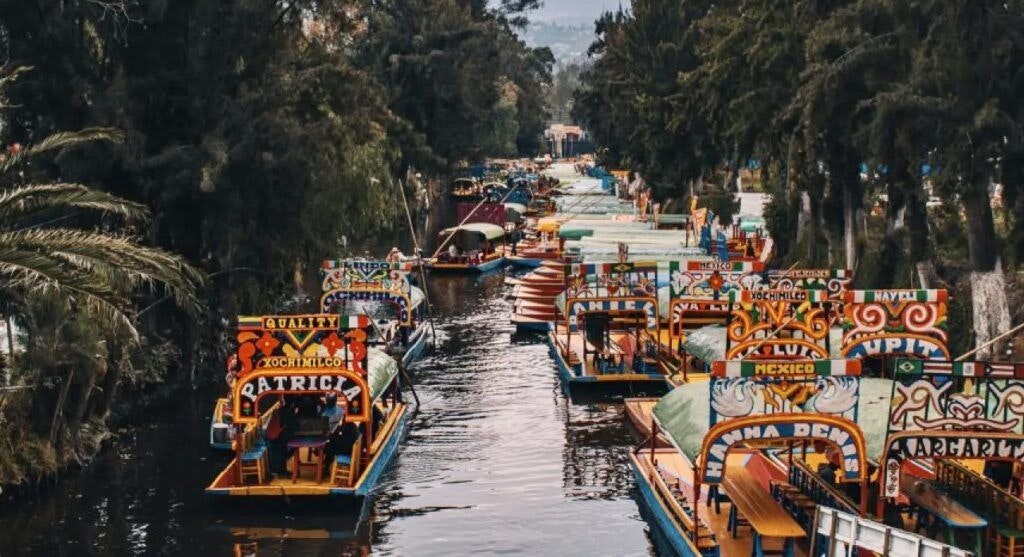
A nearby landmark you'll also want to explore is Xochimilco. Here, you'll marvel at the canals built by the Aztecs. You can rent rides in colorful gondola-like boats as food vendors, artisans, and mariachi bands float past. The atmosphere is festive, especially on weekends.

The aroma of street food, the sounds of mariachi bands, and the colorful displays of local art all set the mood in Coyoacán. Travelers are often surprised by the sheer vibrancy of its markets, including the famous Coyoacán Market, where traditional Mexican snacks like churros and quesadillas al comal are staples. Also available are handcrafted pottery and embroidered textiles, which showcase local artisans.

A standout icon is the Coyotes Fountain, which gives a nod to its indigenous roots. It's nestled in the heart of the Jardin Centenario and is surrounded by trees offering shade. Here, locals enjoy street performances or kick back and relax near the fountain's whimsical design.

After exploring the sights and sounds of Coyoacán, head to any of the superb restaurants to celebrate. For example, Los Danzantes and Corazon de Maguey are top-tier restaurants, each with a unique vibe and menu. For your morning Java or an afternoon caffeine boost, check out the quaint coffee shops. Cantinas abound with authentic cuisine crafted with decades-old recipes.

Coyoacán is a neighborhood with a rich history, lively public spaces, and endless opportunities for exploration. For these reasons, adding it to your Mexico City itinerary is essential.

Local Tips

  • Public transit or ridesharing lets you relax and avoid paying parking fees.
  • Carry cash, as smaller vendors may not accept cards.
  • The guided walking tours offer a deeper insight into Coyoacán's history.
  • Visit early in the morning to avoid the afternoon crowds at La Casa Azul.
  • The cobblestone streets can be uneven, so dress accordingly.

Frequently Asked Questions

As of 2022, there are two international airports in Mexico City. The most frequented, and much more conveniently located, is the Mexico City International Airport (MEX, AICM) also known as the Benito Juarez International Airport. This is a major hub for domestic and international flights, with convenient access to the city’s center and outlying areas via public transport and taxis. Services such as Uber or Didi are permitted, though solely in certain areas and generally a longer walking distance from terminals.

The newest airport, Felipe Angeles International Airport (AIFA), is located approximately 45 minutes north of the city. You may find less expensive flights to AIFA, though the present lack of easy-connectedness to the city can be a disadvantage.

Mexico City has a subtropical highland climate, with consistently mild temperatures throughout the year and low humidity. The area tends to have mild winters, with temperatures reaching into the low 40s at night and 70s during the day. Warmer summer temperatures rise into the 80s during May, the hottest month, with evening averages in the low 60s. The rainy season in CDMX is roughly from June thru September, often with brief heavy rains.

Taxis, Uber and Didi services are popular among travelers for getting around the city. However, the metro system in CDMX is a less-expensive and very convenient option, particularly if you can avoid rush hour times. You can pay as you go, or purchase a Metro Card available at Metro stations. Check Metro maps and download into your phone to help plan your day accordingly. NOTE: Metro service in CDMX available only until midnight.

Mexico City, CDMX, is full of rich experiences for people of all ages. As one of the cities with the most museums in the world, as well as a wealth of archeological sites within and just outside the urban area, there never seems to be enough time to explore all that CDMX has to offer.

  • Historic Center: This encompasses the city’s large square, zócalo, flanked by the National Palace, remnants of the Aztec Templo Mayor, and the Metropolitan Cathedral, one of the largest cathedrals in Latin America. Additionally, this quarter of the city includes the breathtaking Palacio de Bellas Artes Fine Arts building and the Torre Latinoamericana, providing a panoramic view over the city.

  • Chapultepec Park & Museums: This vast green space in the heart of CDMX is one of the largest urban parks in Latin America and home to the historic Chapultepec Castle (National Museum of History), lakes, monuments, art galleries, gardens, a zoo, and more. The absolute must-visit National Museum of Anthropology is located just across from the park.

  • Pyramids of Teotihuacan: Located 45 minutes from CDMX, this ancient Mesoamerican city boasts the majestic Pyramids of the Moon and Sun, and in 1987 was designated a UNESCO World Heritage Site.

  • Xochimilco: Colorful chinampas floating gardens and highly decorated trajinera flat-bottomed boats are distinctive traits of this valuable part of Mexican culture. Located in the southeastern part of CDMX, Xochimilco provides approximately 110 miles of waterways.

  • Coyoacan: Historic and artistic neighborhood on the southern side of CDMX, renowned for the home of famed Mexican artist Frida Kahlo and the San Juan Bautista church. Coyoacan’s relaxed bohemian vibe is enhanced with vibrant local markets, art galleries, awe-inspiring plazas, and the National Museum of Popular Art.

  • Basilica of Our Lady of Guadalupe: Located in the northern part of CDMX, this complex is the most visited Catholic site in the world and pays homage to Mexico’s patron saint, the Virgen de Guadalupe.
More questions

More questions?

Feel free to send us an email with any and all questions you might have regarding the start of a Casago Franchise!

We'd love to help answer your questions!