



About
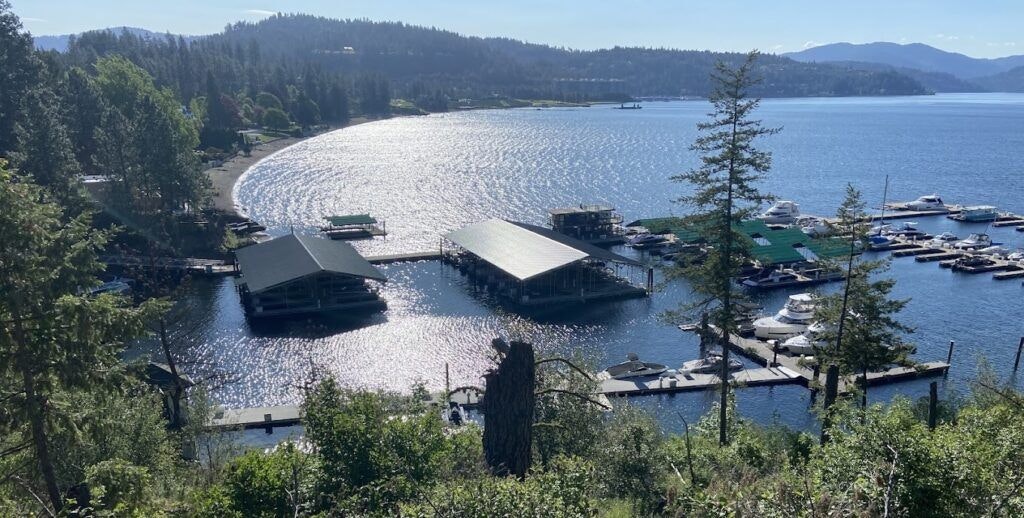
Little did German immigrant Tony Tubbs realize that when he purchased a rocky peninsula in 1882, it would become one of Coeur d'Alene's iconic spots. Named in his honor, Tubbs Hill is a 165-acre park jutting into Lake Coeur d'Alene, offering breathtaking views, trails, history, and unique vegetation.
While Tubbs attempted to build roads and dwellings on the peninsula, the land resisted development. Over time, the city purchased portions of the property in 1936, 1969, 1974, and 1977.
During the 1960s, local preservationists played a crucial role in protecting Tubbs Hill. During these years, there were proposals to rezone the land for a convention center, resort hotel, and condominiums.
Thankfully, key leaders stood firm, and in 1969, the first portion was officially dedicated "for the benefit of the people forever."
Geologically, Tubbs Hill is composed of ancient Precambrian schist and gneiss. These rock formations have very shallow topsoil, making the land fragile and ecologically sensitive. Yet despite that, ponderosa pines, Douglas firs, native shrubs, and a variety of understory plants cling to the rock and support a delicate ecosystem.
Another reason for the park's popularity is its proximity to Downtown Coeur d'Alene. Such convenience makes it easy to plan a fun-filled day of things to do! For instance, after a morning hike around Tubbs Hill, take a tour on the Coeur d'Alene Lake Cruise to learn more about the area's history. Equally close are CDA's renowned eateries, like Stylus Wine and Vinyl Bar and Terraza Waterfront Cafe, to name a few.
Whether you enjoy a picnic at the provided tables or trek the trails, Tubbs Hill is a reminder that nature and community can thrive side by side.
Tubbs Hill: Fun Facts & Cool Features
Hiking enthusiasts will want to trek the 2.2-mile interpretive trail that hugs the shoreline and climbs over rocky outcrops. According to AllTrails, it's an easy, well-marked trail that climbs 298 feet and should take 30 to 60 minutes to complete.
For budding geologists, the rock formations are a highlight. The park is composed of ancient schist and gneiss, resulting in thin soil in some areas. These conditions make every tree, moss patch, and shrub feel hard-won and deeply rooted. For these reasons, stay on the marked trail to minimize erosion.
Tubbs Hill is rich with history, which you can discover on the trail. Near the start of your hike, look for the concrete footings of the Corbin House. It was the home for railroad tycoon D.C. Corbin, who opened the first railroad to reach CDA in 1886.
At the trail's halfway point are the concrete footers of the 1914 grandstand. Here, families gathered for boat races and Fourth of July celebrations. At the two-mile mark are the remnants of the Coeur d'Alene Mill Co., which closed in 1929.
Nature and wildlife enthusiasts will find much to admire while hiking. Keep an eye open for deer, osprey, bald eagles, and turkey. Sprouting from the thin soil are Douglas Firs, Tamaracks, Ponderosa Pines, ferns, lichen, and bushes. Edible berries are at ground level, like the Oregon Grape and the red Kinnickinnick, but they are very sour!
Even if you don't want to hike, bring carryout from a nearby restaurant, like Midtown Bluebird, for a picnic. Tables are near the parking lot, along with restrooms and a drinking fountain, making it an idyllic picnic spot!
For more information about this park, explore this brochure.
For these reasons, it's pretty clear to see why Tubbs Hill is a must-see on your Idaho vacation. Here, you can slow down, reflect, and connect with the landscape that has shaped Coeur d'Alene.
Local Tips
- The trail is rocky and root-filled in spots, so wear appropriate footwear.
- Dogs are allowed, but must stay on leash.
- Stay on marked trails to prevent erosion.
- Bring water, snacks, and a towel to enjoy Tubbs Hill Beach.
- Use the trail map to take side trails and the fire access road.